Footfall Report: Presence is back. Purpose is still under pressure.
PFM’s H1 2026 UK footfall data shows modest market growth, but the real story is conversion: people are present in retail areas, yet shopping visits continue to lag behind.

At PFM, we measure movement every day. Through thousands of sensors across the UK, we capture real-world footfall data from streets, shopping centres and retail locations — turning everyday movement into insight that helps destinations understand what is really happening on the ground. And in H1 2026, the data tells a clear story.
UK retail footfall is growing again. Modestly, but meaningfully. Total UK footfall rose by +0.64% year-on-year. Streets led the way at +2.03%, shopping centres stayed positive at +0.92%, and passers-by grew by +1.06%.

That sounds like good news. And it is. But let’s take a closer look.
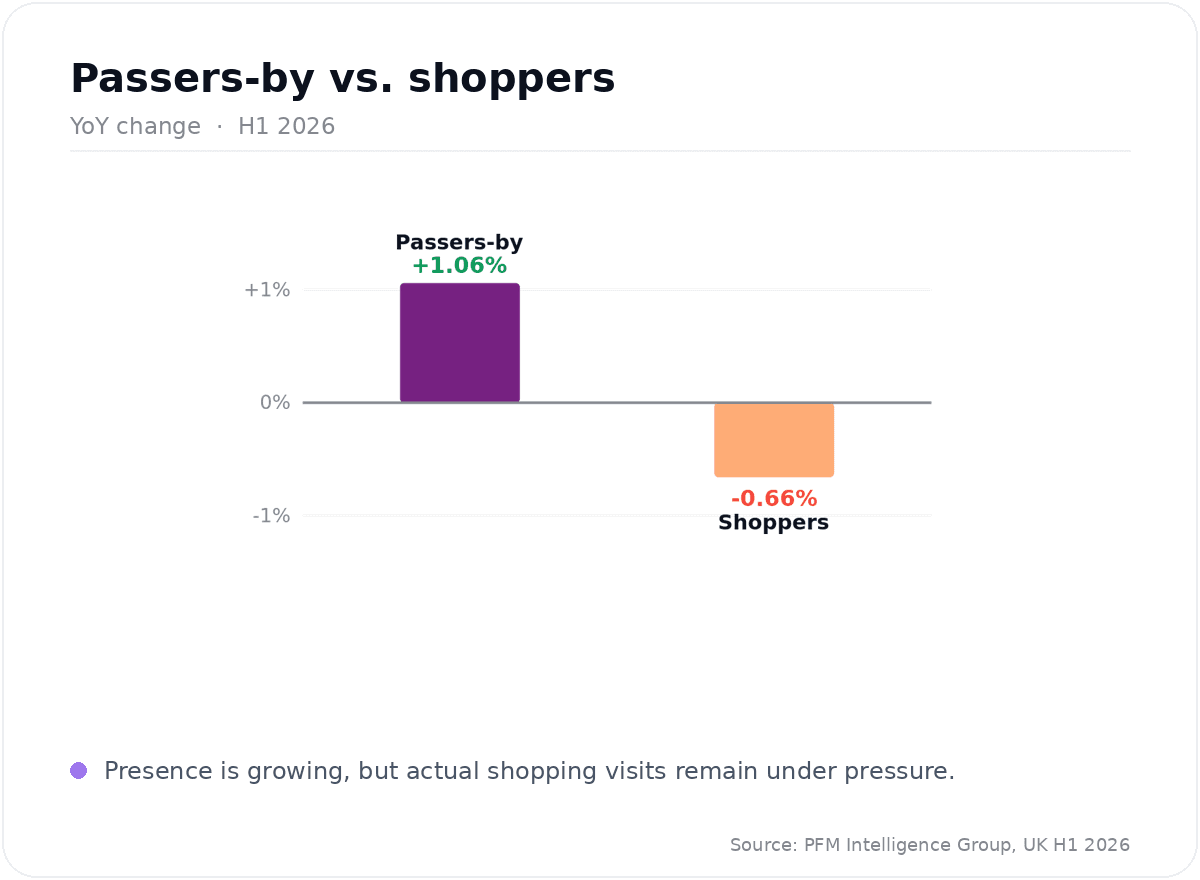
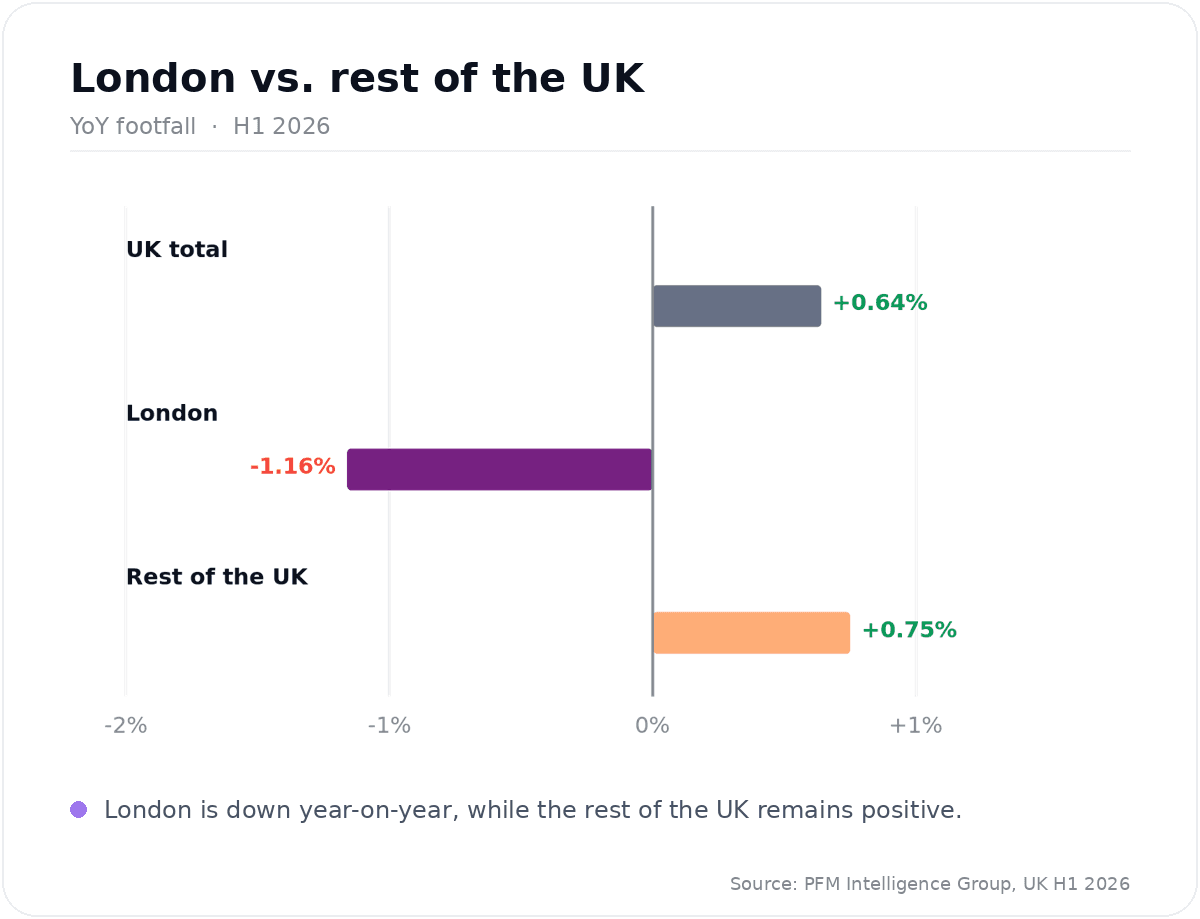
Actual shopping visits fell by -0.66%. London underperformed too, down -1.16%, while the rest of the UK grew by +0.75%.
The message is clear: people are present in retail places, but presence alone is not enough.
The high street has movement. Now it needs meaning.
We see this pattern across the market. Retail destinations are still part of people’s everyday lives. They walk through them. They use them. They pass by them. But shoppers are more selective.
“The UK H1 figures show that footfall resilience does not automatically translate into store visits. People are still present in retail areas, but actual shopping visits remain under pressure. London’s weaker performance makes local relevance and everyday convenience more important than ever.”
— Wendy Hulshof-Hoven, Head of Data & Insights, PFM Intelligence Group
They need a reason to step inside. Convenience matters. Local relevance matters. Timing matters. Experience matters. And for operators, that changes the game.The real question has evolved from: How many people are nearby? To: How many of them are ready to become purposeful visitors?
London shows the pressure point
London’s weaker H1 performance matters: The capital has density, transport links and constant movement. Yet footfall declined. That tells us something important: urban presence does not automatically create commercial momentum.
In busy places, attention is scarce. As Retailers, shopping centres and hospitality operators, you'll need to understand when people pass, when they pause, and what turns a route into a visit. Guesswork will not do it. Movement data reveals the gap between being seen and being chosen.
The winners will convert, not just count
A positive footfall number is encouraging. But it is only the start.The real opportunity lies in conversion. Turning passers-by into shoppers. Turning visits into value. Turning daily patterns into smarter decisions on staffing, leasing, marketing, opening hours and local activation.
That is where movement intelligence earns its place. Because when you understand the difference between presence and purpose, you can act with confidence. H1 2026 proves that UK retail is resilient. But resilience alone will not shape the next chapter.
Insight will.